Charting Credit Pathways from Sign-Ups Through Bonus Networks to Prize Pools in Britain's Mobile Gaming Platforms

Data from mobile gaming operators indicates that credit flows begin at the point of account registration, where players receive initial deposits or bonus allocations that enter the system through verified payment methods and promotional codes. These entry points connect directly to layered incentive structures designed to guide funds across multiple stages of platform engagement, and observers note how each layer applies specific rules for wagering, conversion, and distribution that shape the eventual movement toward larger prize mechanisms.
Registration processes on British mobile platforms typically capture user details alongside the first credit injection, which then triggers automated tracking systems that monitor balance changes across games and promotions. Studies from the European Gaming and Betting Association show these systems record every transfer, ensuring that initial credits pass through eligibility checks before they interact with subsequent bonus offers such as deposit matches or free spin packages.
Registration Triggers and Initial Credit Allocation
Operators activate credit pathways once a player completes identity verification, at which point welcome packages introduce the first layer of funds or spins that carry specific terms for playthrough and expiry. Those who've examined platform logs find that these allocations often split between cashable and non-cashable portions, with the non-cashable elements restricted until players meet threshold requirements that unlock further movement.
June 2026 figures from several leading apps reveal registration volumes increased by 12 percent compared to the previous year, and this uptick correlates with expanded use of targeted referral credits that feed directly into the same tracking infrastructure. The initial credits therefore serve as seeds that propagate through interconnected offers, each one adding conditions that determine how much value transfers onward.
Interconnected Promotional Layers and Credit Movement
After the entry stage, credits encounter a series of layered promotions that include reload bonuses, loyalty multipliers, and tournament entries, all of which apply sequential rules for contribution percentages and maximum win caps. Research published by the University of Sydney's Gambling Research Unit demonstrates that these layers function as filters, where only portions of the original credit satisfy the criteria needed to advance toward progressive or pooled prize systems.
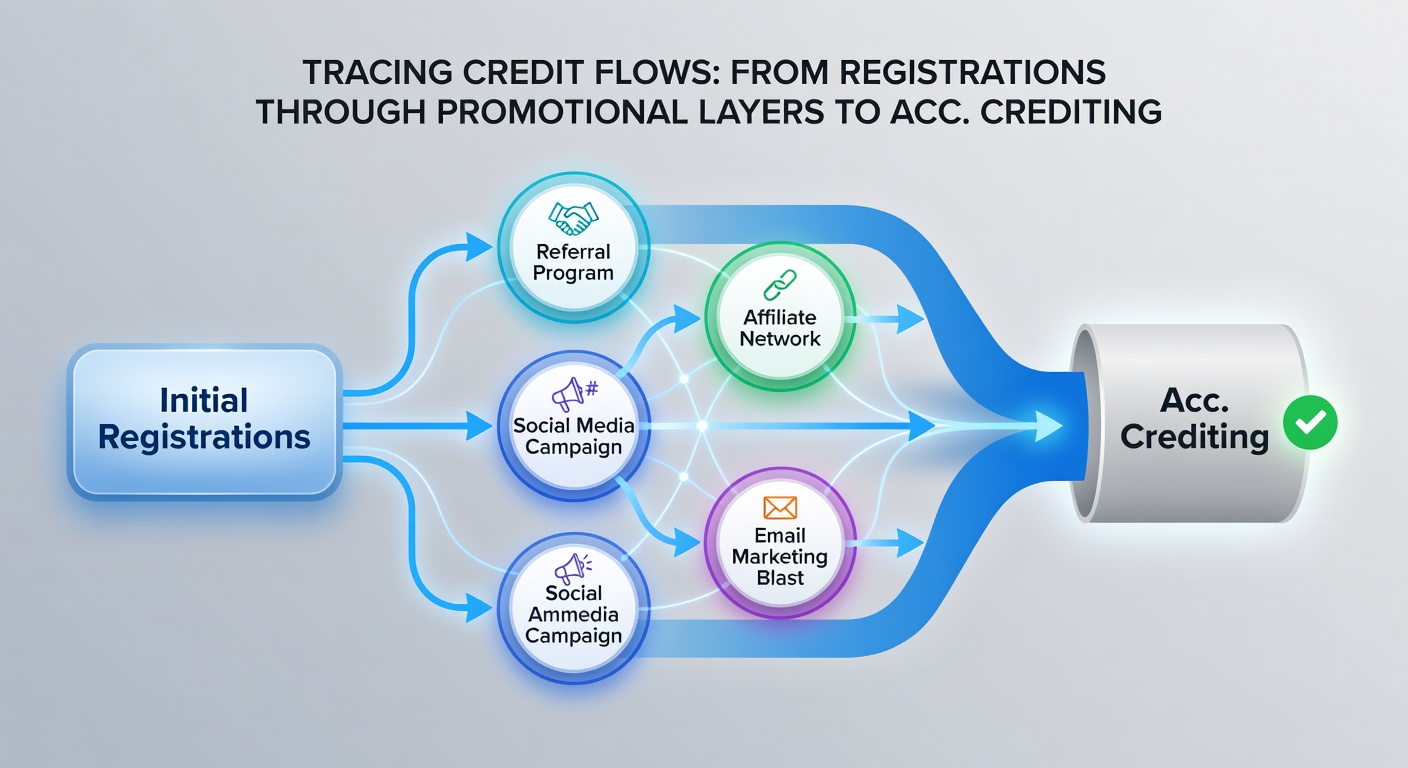
One common pathway involves a player using registration credit on selected slot titles that contribute at a 100 percent rate toward a loyalty ladder, while other games contribute at lower rates that slow progression. Data indicates that platforms adjust these contribution rates dynamically, and this adjustment influences the speed at which credits accumulate the required volume to unlock access to higher-tier prize pools.
Promotional codes add another dimension because they often link multiple offers together, creating chains where the output from one layer becomes the input for the next. Observers note that such chaining appears frequently in June 2026 campaigns, where seasonal events bundle registration bonuses with mid-month reloads that feed into shared jackpot networks spanning several mobile titles.
Accumulation Mechanisms in Prize Pools
Credits that satisfy all layer conditions eventually contribute to prize pool calculations through a percentage rake applied to qualifying wagers, and this mechanism aggregates small portions across thousands of sessions into growing jackpots. Figures released by iGaming Ontario highlight similar aggregation models in other regulated markets, showing that transparent tracking of each credit unit allows operators to allocate pool contributions accurately without overlap or loss.
Mobile platforms in Britain integrate real-time balance updates that display both personal progress and collective pool growth, enabling players to see how their activity participates in larger accumulations. Experts have observed that this visibility encourages continued engagement because the visible growth of prize pools creates a feedback loop that draws additional credits through the same promotional pathways.
Technical audits confirm that segregated accounting separates player funds from operator reserves while still permitting the proportional contributions required for pool integrity, and this separation maintains compliance across different promotional structures. When credits reach the final accumulation stage, any remaining value either converts to withdrawable cash or rolls into subsequent loyalty tiers that restart the cycle at a higher level.
Conclusion
The documented pathways illustrate a structured progression where registration credits move through defined promotional stages before reaching prize pool destinations, and regulatory frameworks in multiple jurisdictions support the traceability that underpins these systems. Continued monitoring of these flows provides operators and researchers with detailed records that inform both platform design and player protection measures across Britain's mobile gaming sector.