App Integrations Revolutionizing Exclusive Spin Pool Accessibility at Online Gaming Sites

Digital venues have witnessed a steady shift as app integrations streamline player entry into exclusive spin pools, those curated collections of bonus rounds and jackpot opportunities that sit apart from standard game libraries. Developers now embed direct connections between mobile applications and backend casino systems, which allows users to bypass traditional login sequences and land straight into timed or membership-only spin events. Research from industry analysts shows these links reduce friction by combining authentication, payment processing, and pool selection into single workflows that complete in seconds rather than minutes.
Platform Connectivity Driving Pool Access
Operators deploy APIs that sync real-time availability of spin pools across multiple apps, so a player who switches devices keeps the same eligibility status without restarting qualification steps. Data from the American Gaming Association indicates that venues adopting unified app frameworks saw participation in premium pools rise by double-digit percentages during the first year of rollout. These connections also feed live updates on pool sizes, prize tiers, and remaining entry windows, giving users a dashboard view that updates continuously rather than requiring manual refreshes.
Third-party software providers supply the middleware that handles secure data exchange between a venue's slot servers and a player's chosen app. When integration depth increases, venues gain the ability to segment pools by player behavior metrics such as session length or wager volume, which creates tailored offerings that appear only inside the integrated environment. Observers note that this segmentation relies on encrypted tokens passed between systems, maintaining compliance while expanding the range of accessible spins.
Technical Mechanisms Behind Seamless Entry
Push notifications triggered by pool openings reach users through the app layer, and one-tap responses reserve spots before capacity fills. Backend logic then allocates spins from the pool to the player's account, often within the same session. Studies conducted by university gaming labs reveal that such notification-plus-reservation sequences cut average wait times from several minutes down to under thirty seconds in optimized setups. The architecture further supports cross-venue pooling, where multiple operators share a single spin inventory under agreed contribution rules, expanding the prize scale without individual sites bearing full liability.
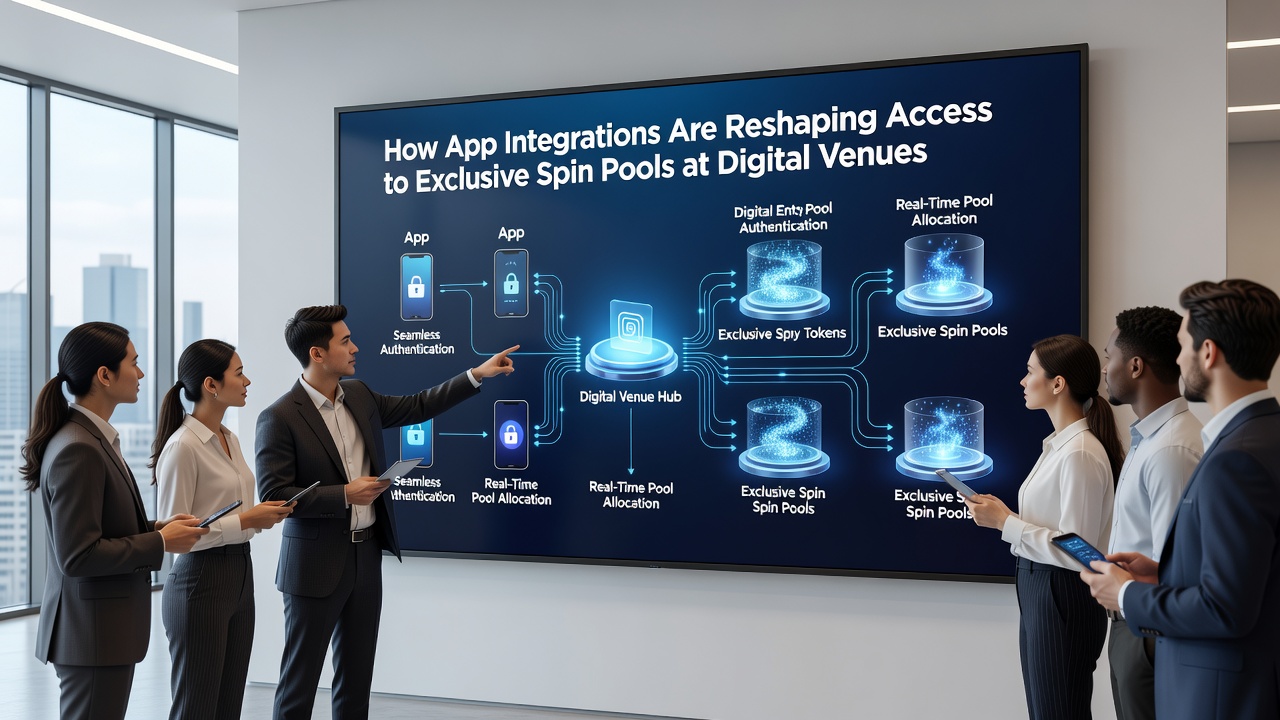
Encryption standards and token-based handoffs keep financial and gameplay data isolated during transfers between app and venue servers. When a pool reaches its contribution threshold, the system automatically distributes winnings according to pre-set algorithms, crediting accounts through the same integrated payment rails that handled initial deposits. Figures from the European Gaming and Betting Association show that venues using these unified rails report fewer abandoned sessions during pool events compared with earlier standalone portals.
Player Behavior adn Venue Operations
Users who engage through integrated apps demonstrate longer average session durations because the reduced steps keep momentum high once a spin pool activates. Venue analytics track these patterns by monitoring entry frequency, spin utilization rates, and subsequent deposit activity. One documented implementation at a multi-state operator network revealed that app-linked players accessed exclusive pools 2.4 times more often than browser-only users during a six-month test window. Staff training now includes modules on monitoring these app-driven flows, ensuring support teams can resolve token mismatches or notification delays without escalating to engineering teams.
Regulatory calendars in several jurisdictions reference technology upgrades required before mid-2026, and July 2026 marks one such checkpoint where certain digital venues must demonstrate that integrated systems meet updated security and transparency benchmarks. App providers have aligned release schedules accordingly, pushing incremental patches that strengthen audit trails around pool allocation and prize distribution.
Future Developments in Pool Integration
Emerging standards aim to let players carry verified pool eligibility across different operators through portable digital identities managed inside the app. Early pilots test whether a single profile can unlock spins from multiple venues without separate qualification each time. Those implementations still require venue-level approval of contribution percentages and prize structures, yet the underlying data layer remains consistent. Research papers from academic centers focused on interactive media document how these portable profiles lower barriers for occasional players while preserving the exclusivity that high-volume participants expect.
Conclusion
App integrations continue to compress the distance between player intent and pool participation at digital venues. By embedding connectivity at the authentication and notification layers, operators deliver faster, more consistent access to curated spin opportunities. As technical standards mature and regulatory checkpoints approach in 2026, the infrastructure supporting these connections will likely expand further, tying additional data streams and cross-platform features into the same unified experience.